
“We Never Had to Worry About You”: The Emotional Neglect Hidden Inside Family Roles (Downloadable Handouts)
“We never had to worry about you.”
For many people, this sounds like praise. You were responsible, independent, mature, helpful, successful, easygoing, or quiet enough that you didn’t create additional problems for the family.
Sometimes hidden inside that statement is another reality: the adults didn’t have to worry because the child learned how not to need very much from them.
Childhood emotional neglect can be difficult to recognize because it often involves what was missing rather than something obvious that happened. A child may have been fed, clothed, protected, and genuinely loved while receiving very little help understanding their emotional life. Their fear, sadness, anger, loneliness, limits, preferences, and need for comfort may have gone unnoticed or unanswered.
Some children respond by becoming especially capable, pleasing, happy, or useful. Others become quiet and almost invisible. From the outside, these children may look completely different. Underneath, they may be adapting to a similar emotional environment.
When being “easy” becomes a family role
Family roles aren’t fixed personality types or clinical diagnoses. They describe ways children may adapt in order to maintain connection, reduce conflict, protect the family, or find some sense of safety.
A child can occupy more than one role. These roles may also change depending on the child’s age, which family member they are with, what is happening in the household, or what the family needs from them at a particular time.
Ask yourself: What parts of me were welcomed, and what parts of me had to remain unseen for me to keep my place in the family?
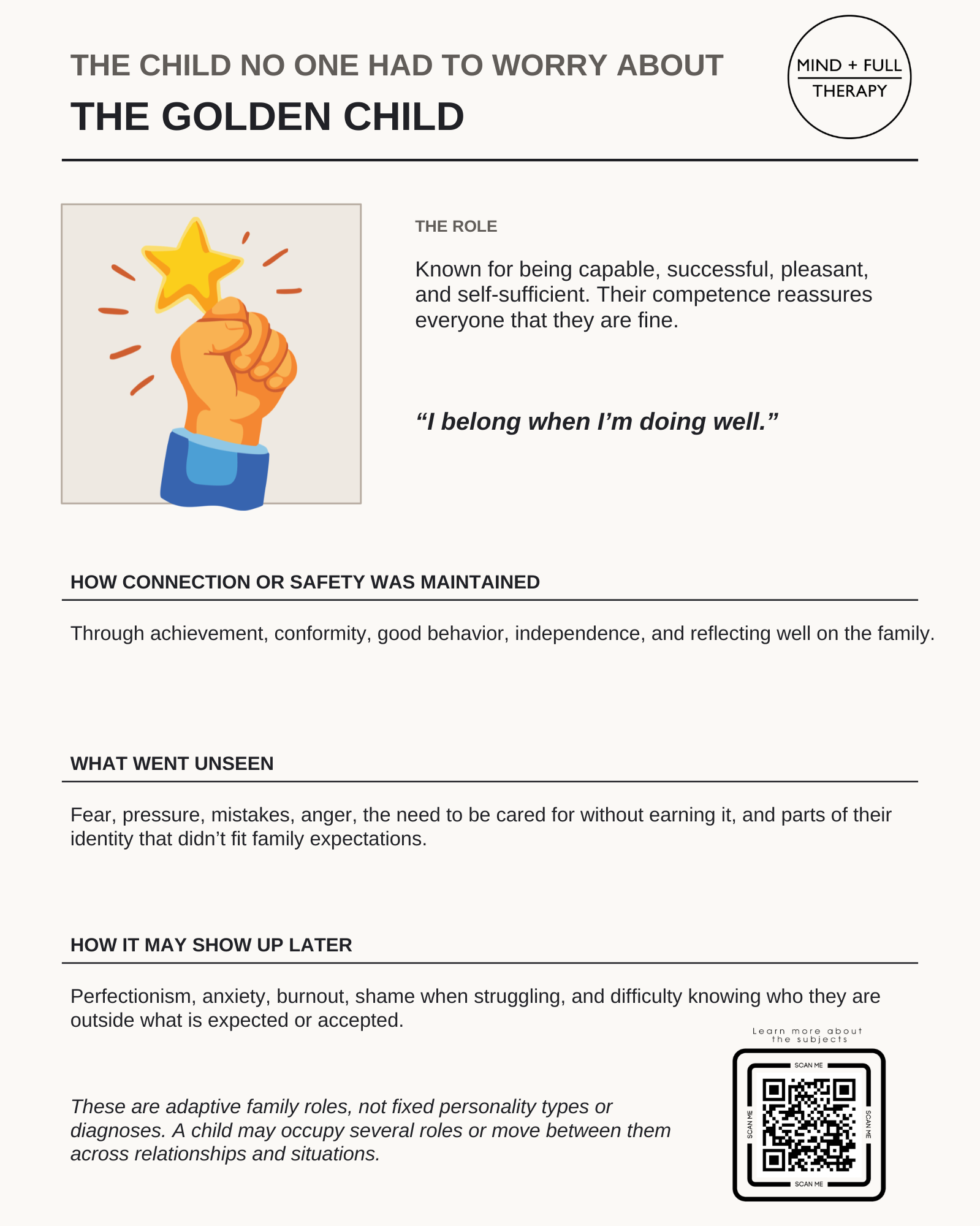
The golden child
The golden child is often seen as successful, mature, talented, easygoing, or self-sufficient. They may perform well in school, make friends easily, follow the rules, and reflect positively on the family.
They are also often highly conforming. They learn how to become the version of themselves that fits the family’s ideas about what is good, acceptable, respectable, or successful. This conformity may involve religion, culture, gender expression, sexuality, relationships, education, career, or the kind of life they are expected to want.
Their accomplishments and willingness to conform may receive genuine attention and praise. The difficulty is that connection can gradually become tied to achievement, compliance, and continuing to represent the family well.
The golden child may become highly skilled at reading expectations and presenting the version of themselves most likely to receive approval. Because this happens early, they may not experience it as performing. It may simply feel like who they are.
What often goes unseen is their fear of failure, uncertainty, anger, mistakes, pressure, and need to be cared for without accomplishing anything. Parts of their identity that fall outside the family’s expectations may remain unexplored, hidden, or surrounded by shame.
As adults, they may appear highly capable while privately struggling with anxiety, perfectionism, burnout, or uncertainty about who they are outside the role. Making choices that differ from religious, cultural, sexual, or family expectations can feel like more than ordinary self-discovery. It may carry a deep fear of disappointing people, losing belonging, or no longer being seen as good.
The make-a-wish child
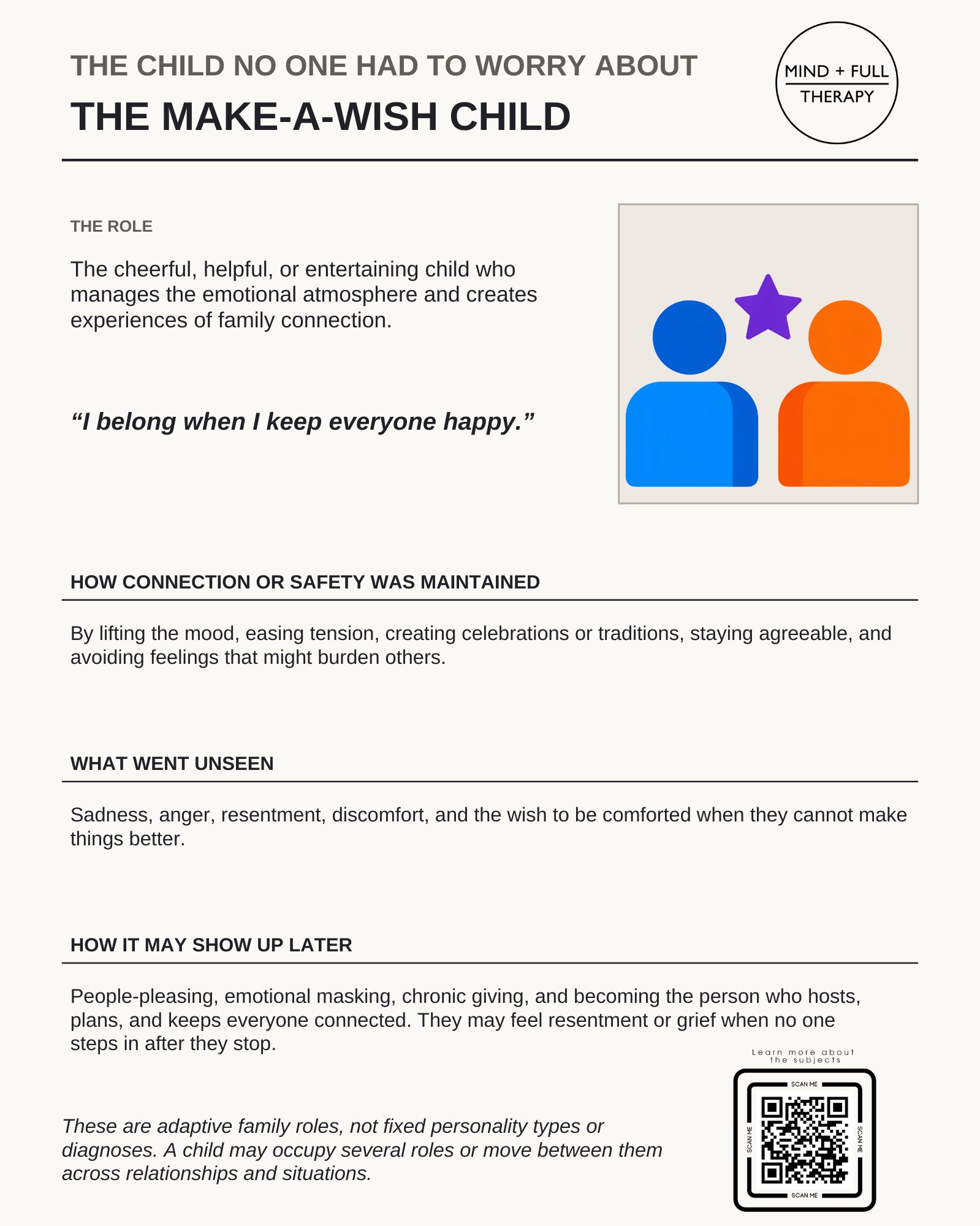
The make-a-wish child brings happiness, connection, hope, or emotional relief into the family. They may be cheerful, funny, affectionate, helpful, entertaining, or especially skilled at making difficult situations feel okay.
This child often learns to monitor the emotional atmosphere. They notice who is upset, when tension is building, and what might help everyone reconnect. They may lighten the mood, smooth over conflict, stay agreeable, or create something for the family to look forward to.
As adults, they often become the family’s connection keeper. They plan the gatherings, invite everyone, host the holidays, remember birthdays, carry on traditions, take the photographs, create the memories, and make sure no one is left out. From the outside, this can look like someone who simply loves bringing people together. Often they do. It may also be carrying forward an old responsibility for creating the experience of family.
The make-a-wish child may feel that if they stop organizing, reaching out, or bringing everyone together, no one else will do it. When they try to set limits, they may discover that the gathering doesn’t happen, the tradition fades, or family members do not naturally maintain the connection. This can bring grief and disorientation alongside the relief of doing less.
Their sadness, disappointment, anger, and need for comfort may have disappeared underneath the role of keeping everyone else comfortable. In adulthood, resentment can feel especially shameful because it conflicts with an identity built around being happy, giving, and easygoing.
They may long to return to the version of themselves who could make everything feel okay. Yet that version may have depended on suppressing the parts of themselves that were tired, hurt, angry, or longing for someone else to create the connection.
Eventually, they may begin to wonder: Did the family naturally stay connected, or was I the person holding everyone together?
The praised parentified child
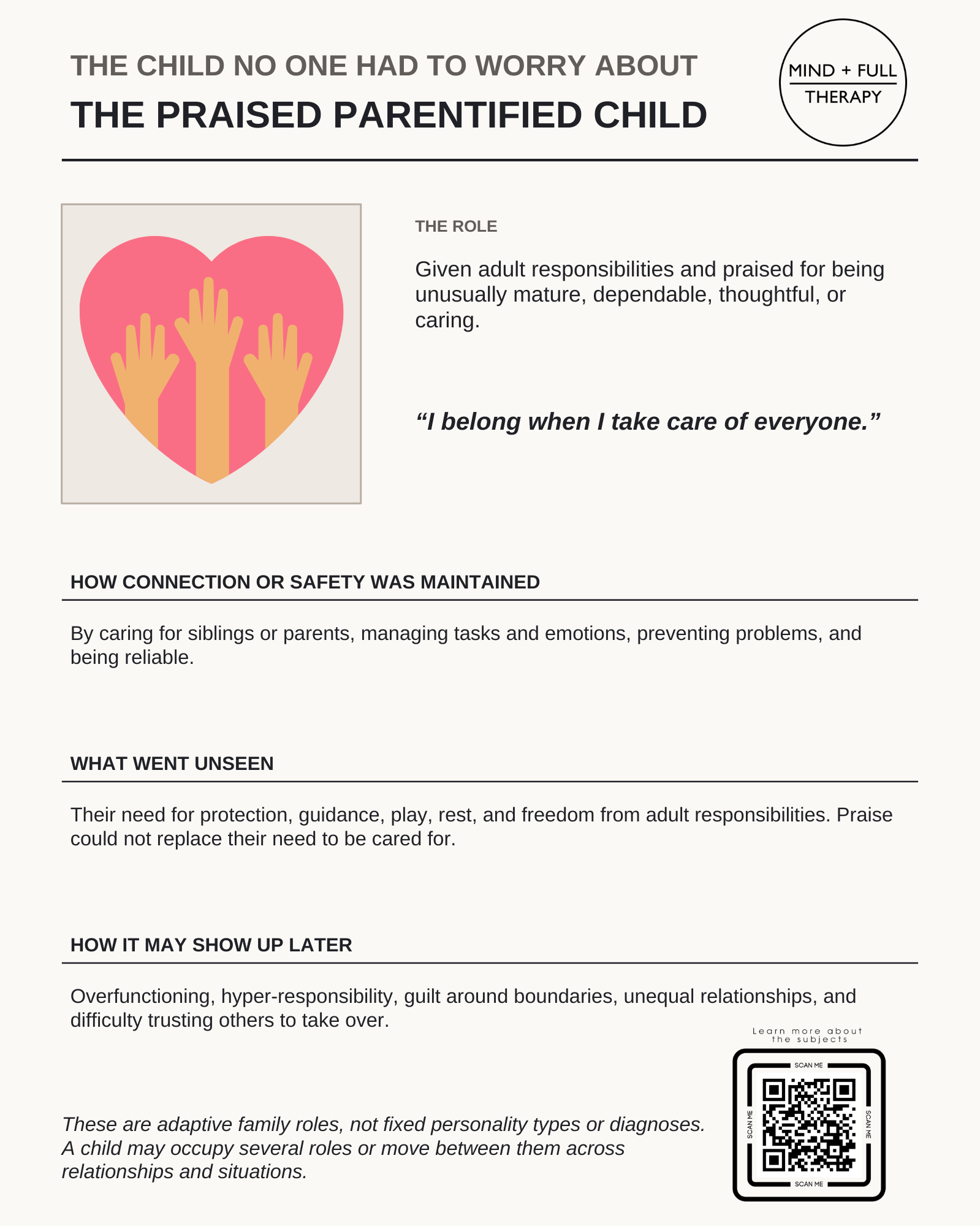
The praised parentified child becomes valuable to the family by taking on responsibilities that developmentally belonged to the adults.
Sometimes this is practical parentification: caring for siblings, preparing meals, managing household tasks, helping with finances, or keeping daily life running. Sometimes it is emotional parentification: listening to a parent’s problems, mediating conflict, absorbing adult fears, keeping secrets, or becoming the person a parent relies on for comfort and stability.
This child may be praised for being mature, compassionate, dependable, wise beyond their years, or “an old soul.” Their abilities are real, and the connection they receive may also be genuine. The praise can make the role reversal much harder to recognize. The child is being noticed for how well they carry responsibility while the family overlooks why they had to become so capable in the first place.
Praise may become the emotional reward that keeps the child in the role. Being helpful brings closeness, approval, and a clear place in the family. Having needs, falling apart, expressing anger, or wanting someone else to take over may feel inconsistent with the person everyone believes them to be.
This creates a complicated experience in adulthood because caretaking may feel like more than something they do. It may feel like who they are and how relationships work.
They may automatically notice what other people need, step in before being asked, and feel most secure when they are useful. They may be exceptionally competent during a crisis while struggling to recognize their own exhaustion until they are already depleted.
Receiving care can feel surprisingly uncomfortable. They may minimize what they need, redirect attention toward the other person, or feel guilty when someone accommodates them. Relationships that don’t require caretaking may initially feel unfamiliar because usefulness has been so closely connected with intimacy.
Resentment often becomes an important signal. The adult may feel angry that everyone depends on them while also feeling anxious, guilty, or ashamed when they consider doing less. Family members may continue praising their strength while resisting the changes that would allow them to stop carrying so much.
Underneath the competence is often a child who needed permission to be dependent, protected, uncertain, playful, and emotionally held. Their maturity may have been admired while their developmental need to be cared for remained unseen.
The invisible parentified child
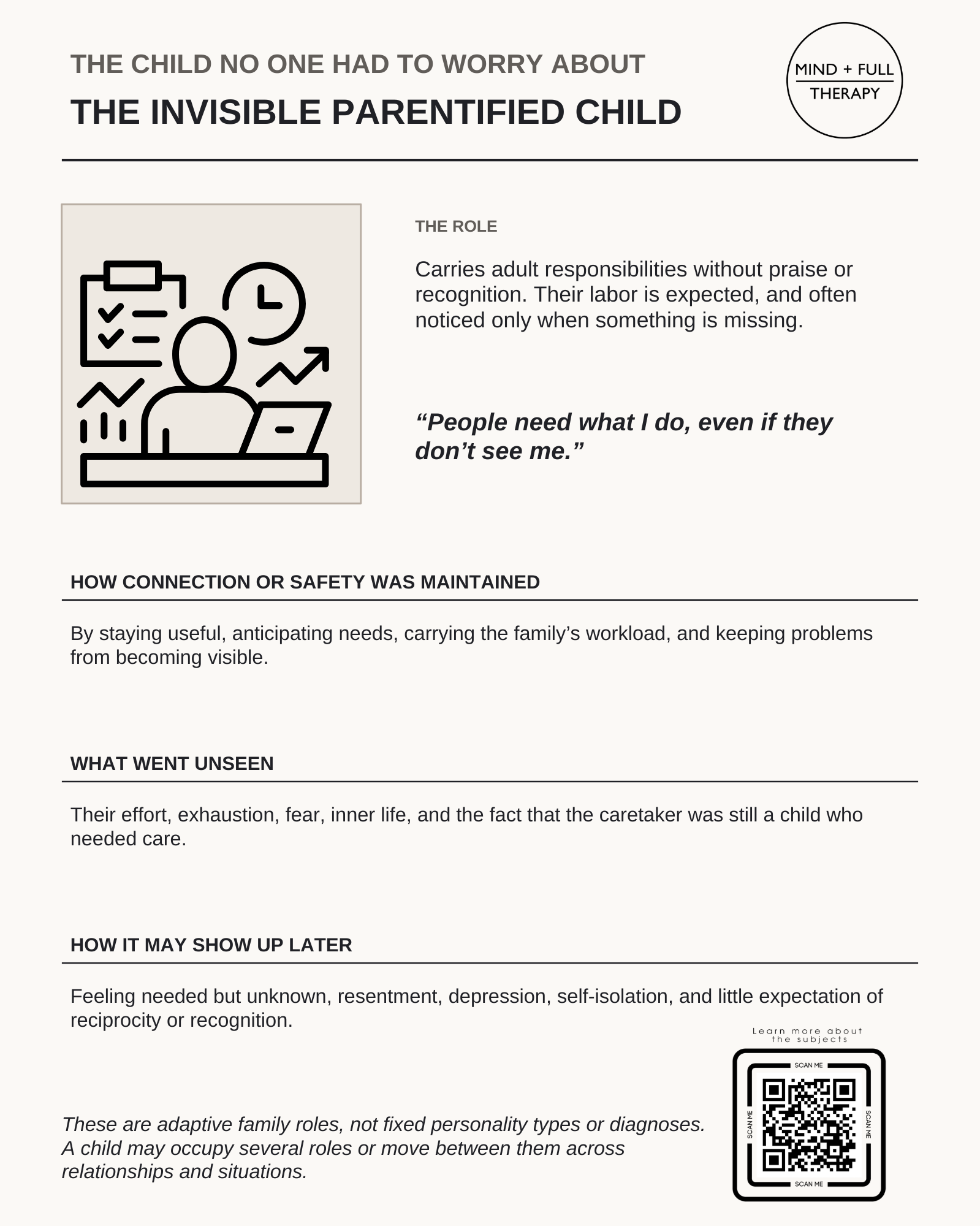
Some parentified children carry adult responsibilities without receiving much praise or recognition. Their labor is expected rather than celebrated.
The Invisible parentified child may care for siblings, manage household tasks, anticipate a parent’s emotional state, or quietly prevent problems from becoming visible. Other people rely on what they do while showing very little curiosity about what the responsibility costs them.
Unlike the praised parentified child, this child may not receive a strong identity as the mature, dependable, or exceptional one. They are simply expected to manage. Their work becomes visible primarily when something is forgotten, unfinished, or no longer being done.
This can create a particular kind of emotional deprivation. The child is needed, although they may rarely feel known. Their effort, exhaustion, fear, inner life, and need for recognition remain largely invisible.
They may learn not to expect appreciation, reciprocity, or anyone stepping in to help. Asking for care can feel pointless, demanding, or strangely embarrassing. They may assume that everyone else is already overwhelmed and that their needs will only create another problem.
As adults, they may continue doing enormous amounts of practical and emotional labor without naming it. Other people may describe them as independent or low maintenance while benefiting from work they barely notice.
Over time, this can contribute to depression, resentment, withdrawal, and a painful sense of being necessary without being personally important. They may feel needed but unknown, surrounded by people who rely on them while remaining profoundly alone.
When they stop overfunctioning, they may not receive concern. They may receive frustration that the work is no longer being done. This can reinforce the older belief that people value their labor more than their internal experience.
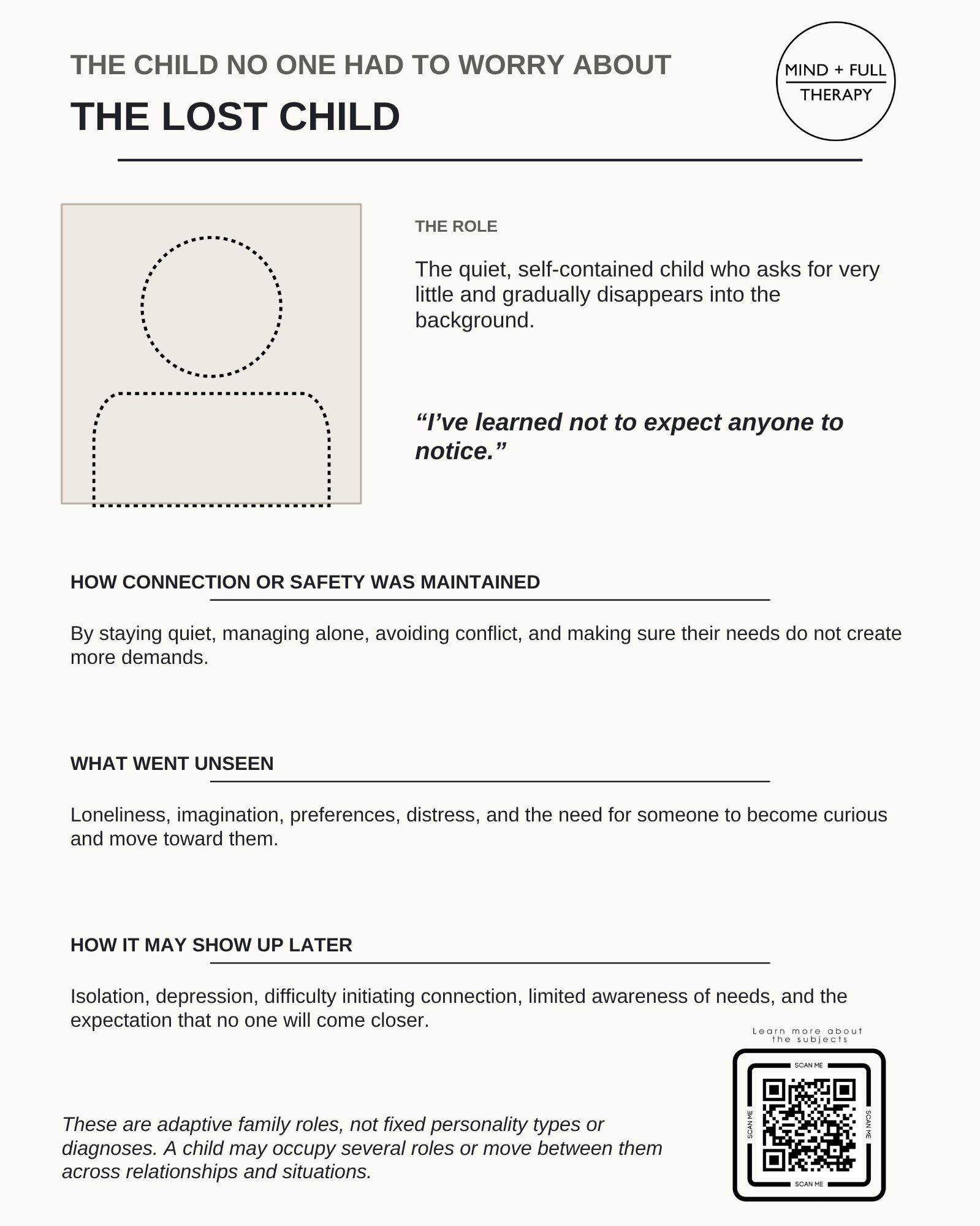
The lost child
The lost child often adapts by staying out of the way. They may be quiet, self-contained, dreamy, withdrawn, or able to occupy themselves for long periods. They ask for little and may appear unusually independent.
While some children find connection through achievement, happiness, or caretaking, the lost child may have stopped expecting much connection at all.
They may retreat into books, fantasy, solitary activities, sleep, games, music, or an internal world where they have more control over closeness. These interests can be real sources of creativity and comfort. They can also provide somewhere to go when emotional contact feels unavailable.
Their loneliness is easy to miss because they rarely create the kind of disruption that draws adults toward them. They may be described as shy, introverted, mature, or someone who simply prefers being alone. The deeper question is whether their solitude was freely chosen or became an adaptation to repeatedly feeling that no one was likely to notice, understand, or move toward them.
There may be a more profound disconnection here because the child did not consistently find connection through doing, achieving, entertaining, or giving. Instead, they learned to need less contact and expect less response.
As adults, they may struggle with depression, isolation, emotional numbness, and difficulty identifying what they need from relationships. They may want connection while also feeling exposed, overwhelmed, or uncertain when someone begins moving toward them.
They may have few close relationships or keep large parts of themselves private even within relationships. Because other people have rarely known what is happening internally, being asked direct questions about feelings or needs can feel intrusive, confusing, or impossible to answer.
The lost child may not consciously believe that their needs are too much. They may have difficulty experiencing themselves as someone who has needs that another person could respond to at all.
Can someone be more than one role?
Yes. Many people recognize themselves in several of these descriptions.
A child might be the golden child through achievement, the make-a-wish child by keeping everyone happy, and parentified by caring for other family members. The same child may become more like the lost child when overwhelmed or when their efforts no longer create connection.
A parentified child may receive praise in one part of the family and remain almost completely invisible in another. A child may also take on different roles with different parents.
These roles describe patterns of adaptation rather than permanent identities. The shared thread is that certain versions of the child became especially useful, acceptable, or easy to manage while other emotional experiences remained unseen.
The schemas underneath these roles
In schema therapy, repeated emotional experiences can contribute to deeply held expectations about ourselves, other people, and relationships.
An emotional deprivation schema can develop when a child learns that other people are unlikely to consistently notice, understand, protect, soothe, or respond to their emotional needs.
Other schemas may develop alongside emotional deprivation:
Self-sacrifice: Other people’s needs should come before mine.
Unrelenting standards: I must perform, achieve, or remain highly capable.
Subjugation: Expressing my needs or anger could threaten the relationship.
Defectiveness and shame: If people saw my full emotional experience, they might reject me.
Approval seeking: My value depends on how other people see or respond to me.
Social isolation: Other people will not understand me, and I do not truly belong.
These schemas can continue shaping adult relationships even when the original family environment is no longer present.
Someone may intellectually know that they are allowed to have needs while still feeling guilt, fear, or shame when they express them. They may understand that rest is reasonable while experiencing it as laziness, selfishness, or danger. They may choose caring partners and still expect emotional support to eventually disappear.
How emotional neglect may show up in adulthood
Many adults with histories of emotional neglect don’t enter therapy saying, “I think I was emotionally neglected.”
They often come in because they are anxious, exhausted, depressed, perfectionistic, lonely, or increasingly resentful. They may be overfunctioning in relationships and feel ashamed that they can no longer do everything without becoming frustrated.
Others struggle to identify what they feel at all. They know something is wrong but have difficulty finding words for their internal experience. They may automatically say, “I’m fine,” because that was once the safest and most familiar answer.
The old role may have become so closely connected with identity that stepping outside it feels disorienting.
If I am no longer the successful one, the happy one, the helper, the caretaker, or the person who never needs anything, who am I?
Will people still want me?
Will the relationship survive?
What does healing look like?
There is no single therapy or universal set of steps for healing emotional neglect. Someone who survived through overfunctioning may need different work than someone who survived by disappearing. The pace and approach also depend on the person’s history, current relationships, access to emotion, and sense of safety.
The specific therapy may look different, but much of the deeper work involves helping someone feel more emotionally known, both internally and within their relationships.
Internally, this may include learning to notice feelings, needs, limits, preferences, exhaustion, and anger before automatically overriding them. It may involve becoming curious about the parts of the self that learned to achieve, conform, entertain, help, caretake, or disappear.
Externally, healing often includes experiencing relationships where more of the person can exist. They can be cared for without first proving their value. They can have limits without automatically losing connection. Their sadness doesn’t have to be transformed into something more comfortable for everyone else.
There is often grief in this work. Being praised for maturity, independence, helpfulness, or success did not necessarily mean the child felt emotionally known. Recognizing that difference can bring sadness, anger, relief, and loyalty conflicts about naming what was missing.
At Mind+Full Therapy, this work may draw from schema therapy, IFS and other forms of parts work, EMDR, Brainspotting, Comprehensive Resource Model, Accelerated Resolution Therapy, Deep Brain Orientating and experiential or relational approaches. What we use depends on how emotional neglect is showing up for that particular person and what helps them access the emotional learning underneath it.
Over time, new emotional and relational experiences can support memory reconsolidation. This gives the brain and body an opportunity to update older internal coding such as:
“My needs are too much.”
“No one will come.”
“I have to be useful to be loved.”
“I can only belong when I am doing well.”
“I am responsible for keeping everyone connected.”
“It is safer not to need anyone.”
The history doesn’t disappear. What can gradually change is the felt expectation that the old family role is still required in every present-day relationship.
Sometimes this work begins by becoming curious about the child no one had to worry about and wondering who might have been there if someone had worried about them a little more.
Download the Family Roles Handouts
We created a downloadable handout for each of these family roles, including the Golden Child, Make-a-Wish Child, Praised Parentified Child, Invisible Parentified Child, and Lost Child. Each handout explores how the role developed, how it helped the child maintain connection or safety, what went emotionally unseen, and how the pattern may continue into adulthood.