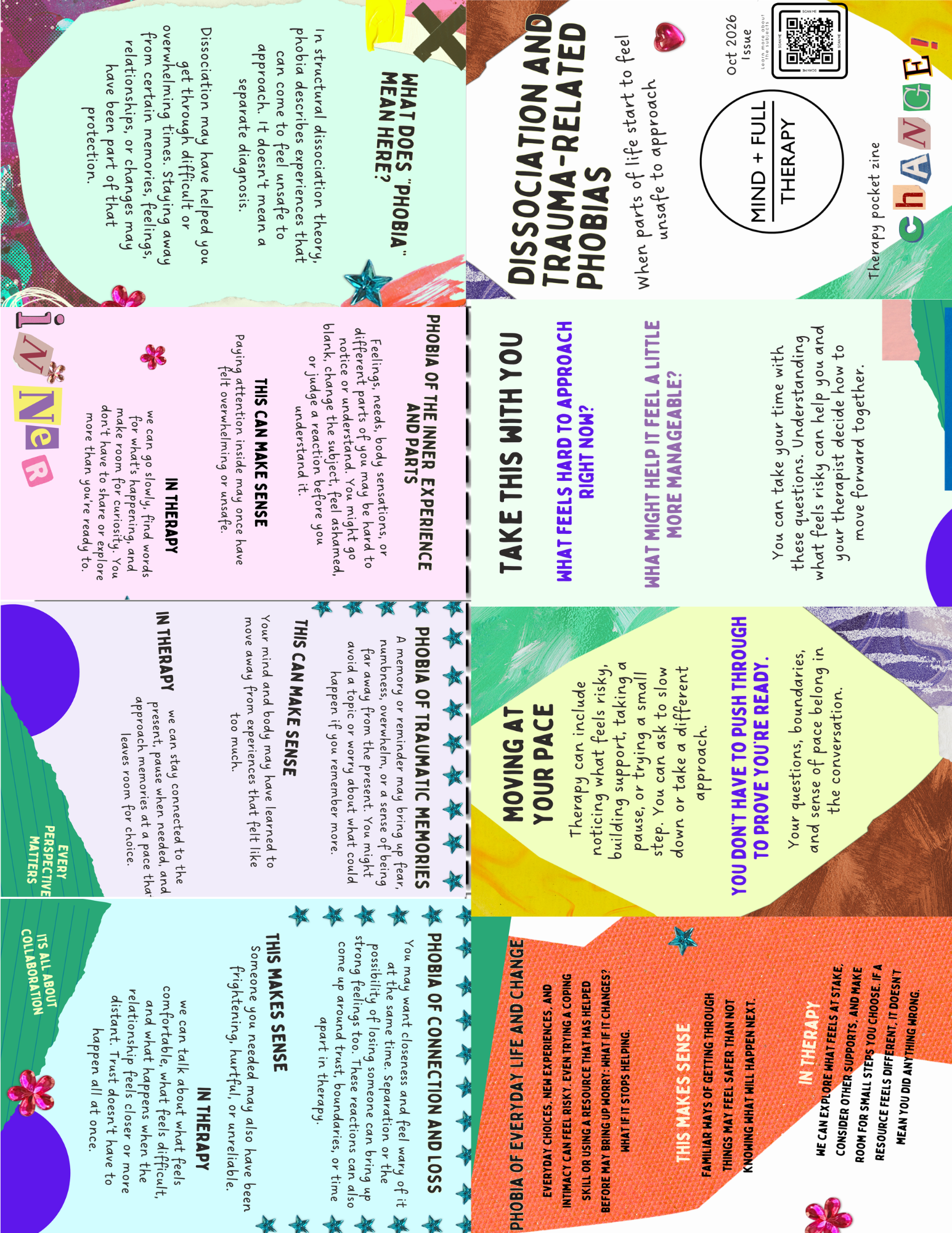
Dissociation and Trauma-Related Phobias: When parts of life start to feel unsafe to approach (downloadable pocket zine)
Have you ever wanted to talk about something in therapy, then found yourself changing the subject, going blank, or feeling far away? Maybe part of you wants to try a new coping skill, while another worries it could make things worse. Or you want closeness and also feel uneasy when someone gets near.
These kinds of conflicts can be confusing, especially when they happen inside. Structural dissociation theory offers one way to understand them. It describes how some parts of a person may focus on getting through daily life, while other parts remain closely connected to traumatic experiences and the responses that came with them.
The theory identifies specific phobias that can help maintain this ongoing split between daily life and trauma. Here, phobia doesn’t mean a separate diagnosis. It describes something that has come to feel unsafe to approach. Avoiding it may have helped someone get through difficult times, even when that avoidance later limits daily life or keeps parts of their experience apart.
The examples below come from structural dissociation theory. They won’t fit everyone’s experience, and you don’t have to recognize yourself in all of them.
Phobia of traumatic memories
A trauma memory may feel less like something that happened in the past and more like something happening now. Remembering can bring up intense fear, shame, grief, or a sense of losing control. It can make sense to keep the memory out of awareness, especially if there hasn’t been enough safety, support, or energy to approach it.
What we can normalize: Avoiding a memory may have helped you keep going when remembering felt too much to manage. You don’t have to tell your story before you’re ready.
What therapy can look like: A therapist can help you build support and stay connected to the present. If you choose to approach a memory, you can do that gradually, with attention to your safety and capacity.
Phobia of feelings, needs, and other inner experiences
Feelings, body sensations, needs, wishes, and thoughts can feel frightening when they’ve been connected with trauma. Someone may judge themselves for feeling anger, needing comfort, experiencing pleasure, or wanting closeness. They may worry that a feeling will take over, or that having a thought or impulse means they will act on it.
What we can normalize: Having a feeling, need, or thought is different from acting on it. Inner experiences can carry a lot of history without meaning you’ve done anything wrong.
What therapy can look like: Therapy can make room to notice and understand inner experiences without rushing to change them. A therapist may help you explore what a reaction has been trying to do for you and what it’s responding to now.
Phobia of other parts of oneself
Within structural dissociation theory, different parts may have different reactions to one another. One part may fear another’s anger or shame. Another may fear being ignored, controlled, or pushed away. Some parts may feel more familiar or easier to approach than others.
What we can normalize: Inner conflict can make sense when different responses developed around different experiences or needs. You don’t have to feel trusting or connected right away.
What therapy can look like: A therapist may help you understand what each response is concerned about and support more communication over time. The work can begin with curiosity, without forcing parts to agree or get along.
Phobia of attachment, attachment loss, and intimacy
Closeness can bring comfort and also feel dangerous. Someone may long for connection, then feel exposed, trapped, or afraid of being hurt when another person gets close. Distance can feel protective and painful at the same time. Being known, asking for help, or depending on someone may carry its own risks.
What we can normalize: Wanting connection while fearing it can make sense when relationships have involved both care and harm. Caution may have helped you get through experiences where closeness wasn’t safe.
What therapy can look like: A therapist can work to make the relationship predictable and collaborative, respecting your boundaries and checking what feels manageable. Trust can develop through repeated experiences. You don’t owe it to anyone before you’re ready.
Phobia of ordinary life
Everyday tasks and situations can become hard to manage when reminders of trauma are woven into daily life. Some people may avoid more and more activities. Others may find themselves constantly reacting to what’s around them, with little room for steadiness or routine.
What we can normalize: When daily life brings up reminders, even ordinary tasks can take a lot of energy. Having difficulty with them doesn’t mean you’re lazy or not trying.
What therapy can look like: Therapy can help identify what makes certain tasks feel unsafe or overwhelming, and what support might make them more manageable. Change can start with small, practical steps chosen with you.
Phobia of change and healthy risk-taking
A change can bring hope and uncertainty at the same time. Trying a new coping skill, adjusting a routine, or beginning trauma work may raise worries about what could be lost. You might wonder whether a resource that has helped you, such as an inner safe place, will still feel safe if you begin trauma work.
What we can normalize: If change has been followed by loss, danger, or disappointment, it makes sense that even wanted changes can feel risky. It’s also understandable to want to protect resources that have helped you.
What therapy can look like: You can talk with your therapist about what you’re worried might change before trying something new. You can decide together whether to experiment, adjust, or pause. Healthy risk-taking can happen in small, considered steps, with room to notice what feels supportive and what doesn’t.
Making sense of the phobias
Structural dissociation theory describes how keeping daily life and trauma-related experiences apart may help someone function. The same avoidance can also make it harder for those experiences to connect with what’s true in the present. The phobias described here are one way the theory explains how that separation may continue.
Therapy doesn’t have to mean forcing memories, feelings, or parts into awareness. It can involve understanding why an experience feels unsafe, building support, and finding more room for choice over time. The pace matters, and you should be able to talk with your therapist about what feels manageable.
If you’d like to keep exploring this topic, you can download the free companion pocket zine. It offers a brief overview of trauma-related phobias and reflection prompts to take with you.
Mind+Full Therapy offers individual therapy for adults in Salt Lake City and throughout Utah by telehealth. Visit mind-fulltherapy.com to learn more, get in touch, or download the free zine.