
Sibling relationships are often some of our earliest and longest-lasting relationships. We grow up sharing homes, caregivers, family experiences, and developmental milestones. These relationships can provide companionship, connection, and support. They can also become a source of significant harm.
Sibling abuse is one of the most overlooked forms of family violence. It is frequently underreported, minimized, and dismissed as normal childhood rivalry. Despite being widespread, it has historically received less research attention than other forms of childhood abuse and domestic violence.
However, less research doesn’t mean we know very little about sibling abuse. Existing studies have identified important risk factors, patterns of aggression, and connections to mental health difficulties, peer bullying, and later relationship violence.
Understanding sibling abuse means recognizing what happens between siblings while also examining the family environment that can allow harmful behavior to develop and continue.
How Common Is Sibling Abuse?
One of the challenges in understanding sibling abuse is that many experiences are never reported. Children may be afraid of retaliation, feel ashamed, or believe that what they’re experiencing is normal. Caregivers may dismiss the behavior, and reporting systems sometimes group siblings with other family members, making accurate estimates difficult.
The University of New Hampshire’s Sibling Aggression and Abuse Research and Advocacy Initiative (SAARA) reports that approximately one in three children ages 0–17 experiences sibling victimization within a year, and that 20% experience chronic sibling victimization.
These figures include sibling aggression and victimization, which are broader categories than sibling abuse. This distinction matters because not every aggressive interaction between siblings meets the definition of abuse, even when the behavior is harmful. The research does, however, challenge the assumption that aggression between siblings is insignificant or simply part of growing up.
Sibling Rivalry, Aggression, and Abuse: What’s the Difference?
Sibling rivalry is a common part of childhood. Siblings may compete for attention, argue over belongings, experience jealousy, or struggle with differences in personality and needs.
Sibling aggression goes beyond disagreement and can involve hitting, kicking, threats, insults, humiliation, or destruction of belongings. Aggression may be mutual or one-sided, and even when both siblings participate, that doesn’t necessarily mean the behavior is harmless.
Sibling abuse involves more severe harm, often within an ongoing relationship where one sibling has greater power and control over another. The harmed child may struggle to defend themselves, establish boundaries, or seek protection.
According to SAARA, sibling abuse is typically one-sided and occurs within a power difference related to factors such as age, physical size, ability, social influence, family roles, or parental favoritism. Abuse is often repeated and longstanding, although a single severe incident can also qualify.
It’s also important to recognize that a child defending themselves against abuse doesn’t make the relationship mutually abusive.
What Does Power Mean in Sibling Abuse?
When people hear the word power, they often think of physical strength, age, gender, or authority. But power within sibling relationships can develop in other ways.
For example, a younger sibling may have greater influence because they’re favored by caregivers or because their threats and accusations are consistently believed. Another sibling may use humiliation, intimidation, or private information to control a brother or sister.
A sister can abuse a brother. A younger sibling can abuse an older sibling. Being physically smaller doesn’t automatically mean someone has less control within the relationship.
One of the most important questions is what happens when the harmed sibling tries to resist.
Are they believed?
Are they protected?
Does the aggression stop?
Are they blamed, punished, or exposed to further retaliation?
Understanding power means looking at the actual relationship and the options available to the person experiencing harm.
The Family Environment and Risk Factors
Sibling abuse doesn’t happen in isolation. Sibling relationships develop within a larger family environment, and research has identified several conditions associated with increased risk.
These include:
exposure to family violence
inadequate supervision
parental favoritism
unequal treatment
family environments where aggression is tolerated
Exposure to Family Violence
Children who witness or experience violence within their families may learn that aggression, intimidation, or coercion are acceptable ways to handle conflict.
Sometimes children direct anger toward siblings when expressing anger toward caregivers feels unsafe. A sibling may become a more accessible target for frustration or resentment.
Research has found associations between sibling violence and other forms of family violence, including intimate partner violence and parent-child maltreatment.
This doesn’t mean children exposed to violence will become abusive. It means that family violence can contribute to conditions in which sibling aggression develops.
Parental Neglect and Inadequate Supervision
Sibling relationships often involve interactions that caregivers never witness. When parents are unavailable, overwhelmed, or inconsistent in responding to aggression, harmful behavior may continue without meaningful intervention.
One child may repeatedly intimidate or harm another while caregivers remain unaware of the severity of what is happening. In some families, adults recognize the aggression but dismiss it as ordinary sibling behavior. Without adequate protection, the harmed child may have few opportunities to stop the abuse.
Favoritism and Unequal Treatment
Siblings growing up in the same household don’t necessarily experience the same childhood. One child may receive more protection, attention, or approval while another is repeatedly blamed or expected to tolerate mistreatment. These differences can influence power within sibling relationships.
For example, when one child’s aggression is consistently excused while another child’s concerns are dismissed, the favored child may gain greater control over the relationship.
Parental favoritism and differential treatment have been identified in research examining harmful sibling relationships.
Rigid Gender Roles and Family Expectations
Research has also identified strict gender expectations and unequal family roles as potential contributing factors, particularly in studies examining sibling sexual abuse. Some families reinforce beliefs about dominance, obedience, authority, or vulnerability based on gender.
These expectations can influence which children are allowed to express aggression, whose experiences are believed, and whether harmful behavior is recognized.
Boys may be discouraged from acknowledging victimization, while girls may be overlooked as potential aggressors.
Research findings about gender differences in sibling violence are mixed, which is another reason to examine the actual relationship rather than make assumptions based on identity.
When Sibling Abuse Is Normalized
“They’re just fighting.”
“That’s what siblings do.”
“You’re being too sensitive.”
These familiar explanations can make sibling abuse difficult to recognize. When caregivers repeatedly dismiss intimidation, humiliation, or violence as ordinary sibling rivalry, children may begin questioning their own experiences.
They may learn that speaking up won’t help, that their boundaries don’t matter, or that maintaining family relationships requires tolerating mistreatment. Sometimes the child experiencing abuse is blamed for provoking the aggression or expected to forgive the sibling who harmed them.
This can create an additional layer of relational trauma. The child experiences harm from a sibling while also experiencing a lack of protection from the adults responsible for their safety. Over time, this may contribute to shame, self-blame, confusion about boundaries, and difficulty trusting their own experiences.
The Impact of Sibling Trauma
Sibling relationships contribute to children’s early experiences of closeness, conflict, belonging, and interpersonal safety. When these relationships involve repeated abuse, children may develop expectations about themselves and others based on those experiences.
For some, relationships become associated with fear, humiliation, unpredictability, or the need to constantly monitor another person’s behavior. Others may learn to avoid conflict, minimize their needs, or take responsibility for maintaining peace.
Research has linked sibling aggression and abuse with anxiety, depression, trauma symptoms, social difficulties, and other mental health concerns. Clinically, some survivors may also experience chronic shame, difficulties establishing boundaries, emotional avoidance, or dissociation.
Repeated sibling abuse can contribute to complex trauma, particularly when it occurs alongside other forms of childhood adversity. The impact depends on many factors, including the severity and duration of the abuse, developmental circumstances, available support, and caregiver responses.
Beyond the Family: Peer Bullying and Dating Violence
One of the important findings in sibling abuse research is that harmful sibling relationships are associated with difficulties beyond the family.
Sibling Abuse and Peer Bullying
Research has identified a significant relationship between sibling aggression and bullying among peers. Children involved in sibling bullying are more likely to be involved in bullying at school, either as victims, perpetrators, or both.
For some children, aggression may become a familiar way of responding to conflict. Others may become more vulnerable to intimidation or mistreatment in peer relationships. However, experiencing sibling abuse doesn’t mean someone will become abusive toward others.
These findings describe associations, and shared family or developmental factors may also contribute to the relationship between sibling aggression and peer bullying.
Sibling Violence and Dating Relationships
Research has also found connections between sibling violence and aggression within dating relationships. Some studies have identified associations between aggression toward siblings and later dating-violence perpetration. Other research has examined links with dating-violence victimization.
These findings suggest that experiences within sibling relationships may be relevant to how people learn about conflict, control, intimacy, and boundaries. However, we need to be careful about interpreting these associations.
Experiencing sibling abuse doesn’t mean someone will become abusive or inevitably experience violence in later relationships. Research identifies increased risks and relationships between experiences, not predetermined outcomes.
Why Sibling Abuse Can Be Difficult to Recognize in Adulthood
Many adults don’t begin recognizing childhood experiences with siblings as abusive until much later in life. They may remember being frightened of a sibling, avoiding certain rooms, hiding belongings, or trying to predict another child’s mood. They may remember being humiliated, threatened, physically hurt, or repeatedly blamed for conflicts they couldn’t control. Yet they may still hesitate to describe these experiences as abuse.
Sometimes this comes from years of hearing that what happened was normal. Other times, it comes from recognizing that the sibling who hurt them was also a child experiencing difficulties within the family.
Both experiences can be acknowledged.
Understanding the circumstances that contributed to someone’s harmful behavior doesn’t erase the impact of what happened. You can recognize that your sibling was struggling while also acknowledging that their behavior was abusive.
Recognizing and Healing From Sibling Trauma
Healing from sibling abuse may involve reconsidering childhood experiences that were previously dismissed as normal. This can include recognizing harmful relationship patterns, exploring shame and self-blame, processing traumatic memories, and understanding how early experiences continue to influence present-day relationships.
For some people, an important part of healing involves grieving the protection they didn’t receive from caregivers. Others may need to explore complicated feelings toward siblings, including love, resentment, loyalty, anger, and grief. Healing may also involve developing boundaries and deciding what kind of relationship, if any, feels appropriate with siblings in adulthood.
There is no requirement to forgive, reconcile, or maintain contact with someone simply because they’re family. Recognizing sibling abuse doesn’t require every family member to agree about what happened. Being family doesn’t make abuse normal, and it doesn’t make the harm any less significant.
Research and Further Reading
University of New Hampshire: Sibling Aggression and Abuse Research and Advocacy Initiative (SAARA)
https://www.unh.edu/saara/our-work/sibling-aggression-abuse
Research, educational resources, and guidance on sibling rivalry, aggression, abuse, prevalence, family dynamics, and long-term consequences.
Western University: Learning Network, Sibling Violence
https://www.gbvlearningnetwork.ca/our-work/issuebased_newsletters/issue-21/index.html
An educational review covering sibling violence, risk factors, warning signs, mental health consequences, peer bullying, and prevention.
Continue Learning About Sibling Abuse
Sibling abuse has been overlooked and minimized for far too long. Greater awareness starts with recognizing the difference between ordinary sibling conflict and abuse, taking children’s experiences seriously, and challenging the belief that harmful behavior is simply part of growing up together.
If this article resonates with your experiences, or you’re interested in learning more about sibling trauma, I encourage you to continue exploring the research and resources available.
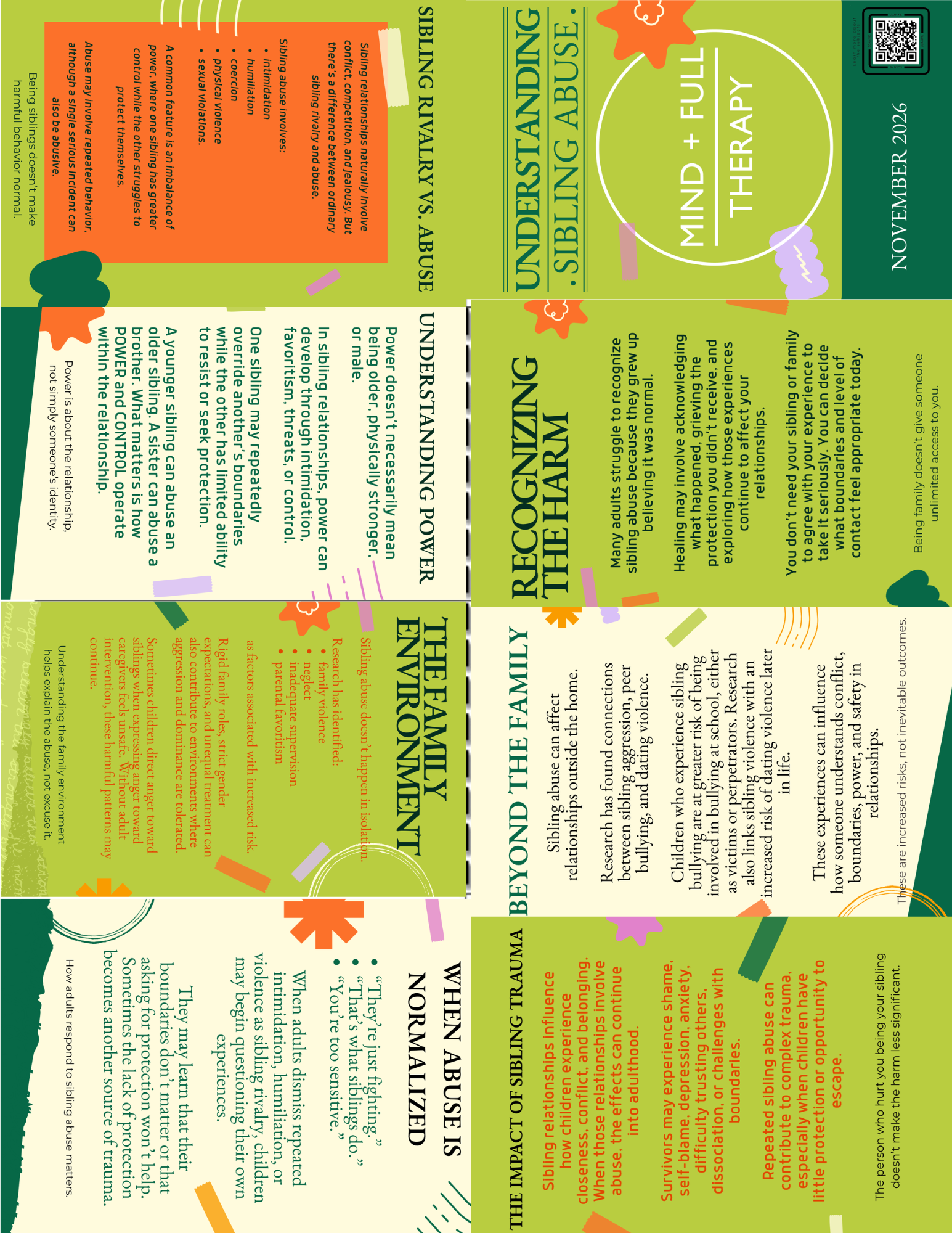
Download Our Free Pocket Zine
We’ve created a free, downloadable pocket zine that explores the differences between sibling rivalry and abuse, the role of power and family dynamics, and the lasting effects of sibling trauma.
Download your free copy, save it for future reference, or share it with someone who might benefit from learning more about this often-overlooked form of childhood trauma.
Explore Therapy With Mind+Full Therapy
If you’re beginning to recognize how childhood experiences with siblings have affected your sense of self, relationships, or emotional well-being, therapy can provide a space to explore those experiences at your own pace.
At Mind+Full Therapy, we specialize in complex trauma, attachment wounds, dissociation, and the lasting effects of childhood relational trauma. Our approach is collaborative, compassionate, and grounded in helping you better understand your experiences while developing greater choice in how you relate to yourself and others.
We offer in-person therapy in Millcreek, Utah, and telehealth throughout Utah.
Mind+Full Therapy | Trauma Education & Resources