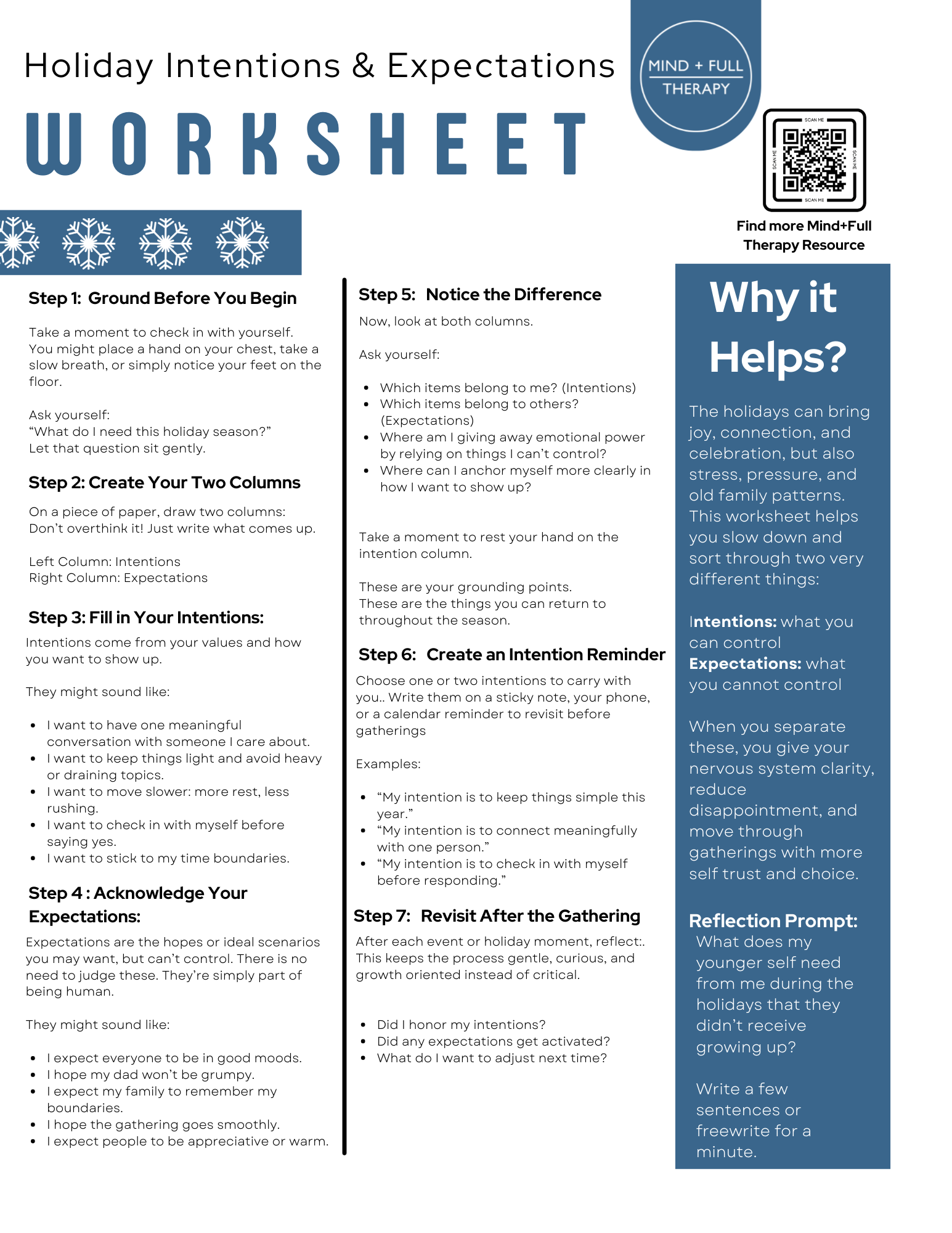
Intentions vs. Expectations: A Holiday Mindfulness Guide (Downloadable Worksheet)
The holiday season has a way of stirring up a lot, joy, nostalgia, pressure, overwhelm, family dynamics. The good, the complicated, and everything in between! One of the most supportive shifts we can make during this time is learning the difference between setting intentions and carrying expectations.
Understanding this difference can soften stress, reduce disappointment, and help us move through the season with more self-attunement and choice.
You can download the Worksheet here.
Intentions: What You Can Control
Intentions are conscious choices. They’re rooted in your values, your agency, and how you want to show up, no matter what others do.
Intentions sound like:
“My intention is to have one meaningful conversation with my sister and check in on how she’s doing.”
“My intention is to keep things light and not get pulled into deep or draining conversations this year.”
“My intention is to make this holiday season more simple, less rushing, more rest.”
Intentions help you create an internal anchor. They give you direction without attaching you to an outcome. They’re about who you want to be, not what someone else might do.
Expectations: What’s Outside Your Control
Expectations often sound like:
“I really hope my family is excited and happy this year.”
“I expect my dad won’t be grumpy this time.”
“I expect my family to make me feel welcome and understood.”
These are completely human hopes, but they’re also outside of our control. We can’t decide someone else’s mood, behavior, emotional availability, or how they respond to us.
And when we hinge our holiday experience on what others do (or don’t do), disappointment is almost guaranteed.
When expectations aren’t met, we often feel:
let down
hurt
overlooked
frustrated
rejected
This doesn’t mean our hopes are wrong. It just means we’re placing our emotional wellbeing in a place we can’t steer.
A Helpful Reframe: Acknowledge Expectations, Anchor in Intentions
You don’t need to “turn off” expectations. You’re human. Of course you have wishes for how the holidays might go. But you can shift where you place your focus.
Step 1: Acknowledge your expectations.
Name them honestly. (“I’m hoping everyone gets along.” “I’m expecting Mom to finally be warm and supportive.”)
Step 2: Redirect toward your intentions.
Ask: “How do I want to show up, regardless of what happens?”
This is where your power lives.
Therapy Exercise: Intentions & Expectations List
Grab a piece of paper and create two columns (or use the downloadable worksheet):
Column 1: Intentions
Write down what you want to do, practice, or embody this holiday season.
Some examples:
I want to take breaks when I need them.
I want to check in with myself before saying yes.
I want to connect with my sister.
I want to keep conversations light.
I want to build in slow mornings.
Column 2: Expectations
Write down the hopes you’re holding, without judgment.
Some examples:
I expect people to be in good moods.
I expect my dad not to be grumpy.
I hope my family remembers the boundaries I’ve set.
When you’re done, place a hand on the intentions column. Let your attention rest there.
Your intentions are your stability. Your expectations are simply information, things to be mindful of, not things to build your emotional safety on.
Why This Matters (Clinically and Personally)
When we shift from expectation to intention:
we reduce emotional reactivity
we feel more grounded in gatherings
we experience less disappointment
we create more internal clarity
we move through family dynamics with more self-trust
It’s a kindness we can offer our nervous system and our younger parts that historically felt responsible for managing everyone’s emotions.
Reflection
This season, try giving yourself the gift of clarity. Set intentions that nourish you. Acknowledge expectations with compassion, not pressure. And allow yourself to choose how you want to show up, moment by moment.
If you’d like support navigating family dynamics, boundaries, or holiday-season overwhelm, Mind+Full Therapy offers both in-person and virtual sessions in Utah.
You can also find free downloadable exercises and guides on our blog to support you throughout the holidays.
You don’t have to move through this season alone and you don’t have to rely on perfect family dynamics to feel grounded.
You can build that from within.
Download the Intensions and Expectations worksheet